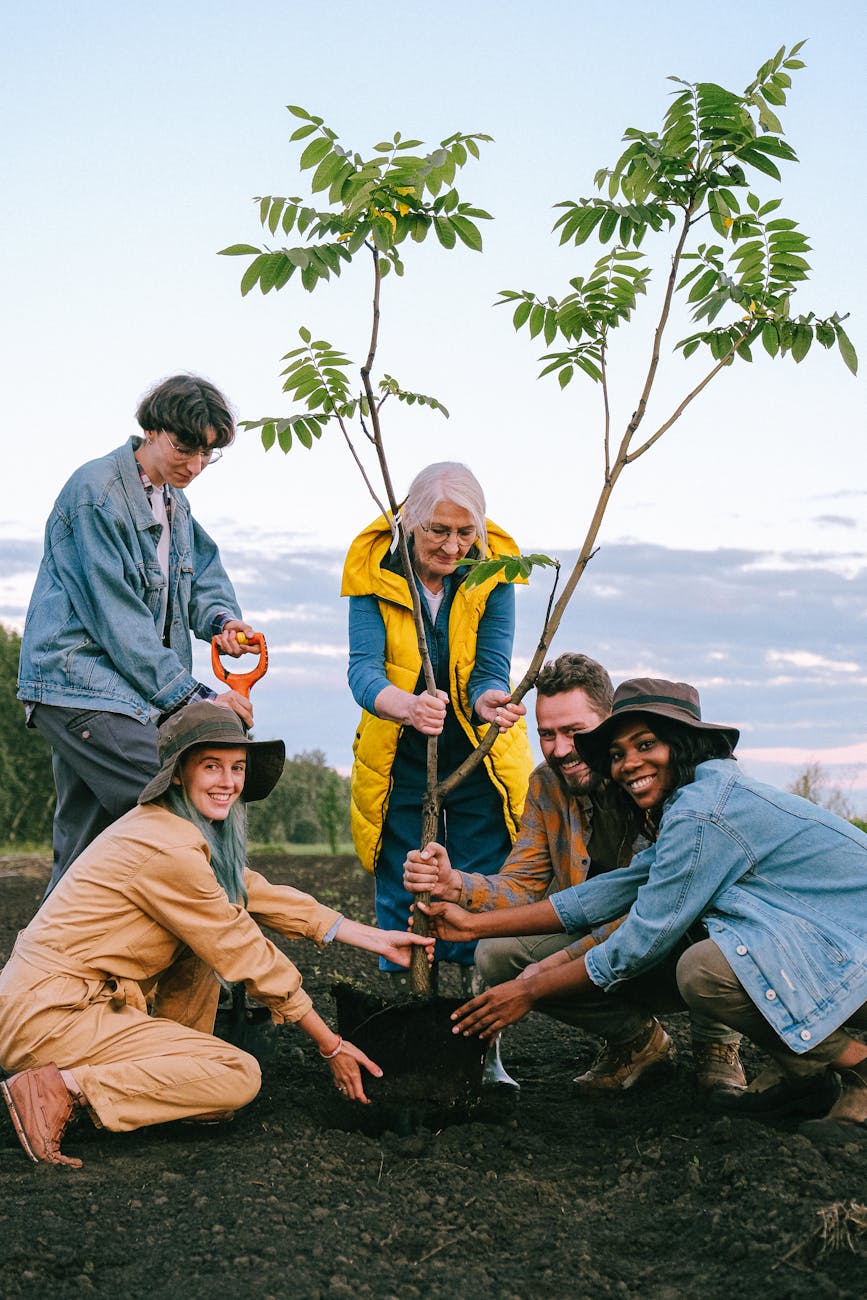
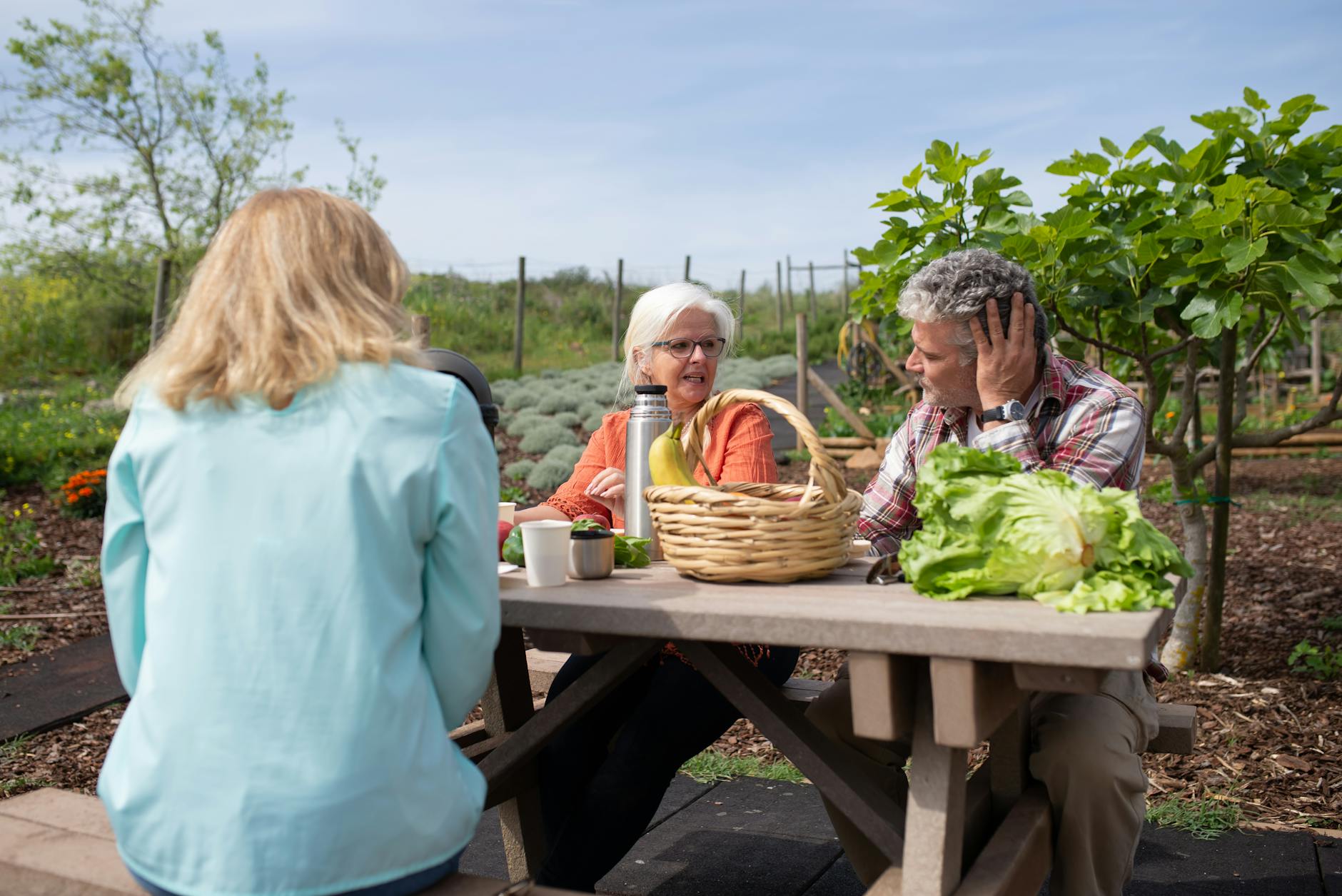
Social impacts of gardening can be found all around – especially this time of year! The social impact of gardening may crop up in daily conversation with colleagues by asking how their weekend went, in our trip to the local hardware store as we drive by a fully stocked greenhouse, in our drive around town noticing Spring bulbs, emerging plants, and which neighbors haven’t cut their lawn yet. This Spring I noticed there were red tulips in front of homes nearby as well as on the corners downtown. I had mentioned this to someone I met in a store as we were commenting on the nice Spring weather and colorful bulbs that were in bloom. My new friend shared that years ago the town had sold red tulips for a fundraiser and asked residents to plant them in their yard. It was a symbol of unity and an effort of town beautification. I need to find some vibrant red tulips to plan this year so I can participate in the town’s beauty and unity! This conversation was a reminder to me that I am lucky to have a natural tendency toward extraversion and easily make friends. A few years ago, I was unexpectedly laid-off and took the opportunity to do something I had wanted to do for years – become a Master Gardener. While I love gardening, I’m not a genius, and I felt like I don’t know anything of significance on the topic. Also, I needed friends because I’m a transplant. Going through the Gardener Training class through the University of Illinois extension website was a fun challenge. They now offer classes online, so participants no longer need to meet every Tuesday at 10:00am which never worked for people of working age that needed to support themselves or their family. That one little class, that one little interest, that one little seed in my life sprouted roots and I have grown from a Gardner in Training, to a Master Gardener and my social circle has exploded with people that are much smarter and more knowledgeable than I, that love to share their knowledge and help others. Being in one Master Gardner group is great, but our county collaborates with 2 neighboring counties, so I have had the opportunity to travel and support our great state capitol’s Sangamon County Master Gardener Help Desk answering incoming email questions, phone calls, and drop-ins. The ladies that trained me on the proper way to research and respond to Help Desk questions introduced me to many more Master Gardeners in my area which has led to joining an Herb Guild, volunteering at a gardening day event each Spring, a Master Gardener book club, being invited to Spring seed catalogue parties, and helping with the 50th Year of Master Gardeners in Illinois last year. I was honored to introduce 2 well-known and TV-famous speakers to the podium to start their classes. I had butterflies. It was exciting. My Master Gardener friends also ran the evening Gardener Trivia night for the conference weekend, so I got to help announce trivia answers. We all had so much fun. My gardening connections have further led to knowing more people in my neighborhood, community, and church. I give this example of an interest transforming my life by exponentially expanding my group of friends and acquaintances because I did not put forth a large effort – I merely took one step toward learning in my local area (and growing zone). Gardening has majorly impacted my social life in a positive way. I read a study that was recently conducted and looked back on gardening and self-care during the pandemic (Belser 2026). The pandemic increased the “do it yourself” attitude on many subjects including growing your own food when social networks were shut down. The study focused on many benefits including social and relational benefits of gardening. They focused on 6 roles individuals play throughout their lifetime – child, student, leisuriate, citizen, worker homemaker. The outcome of the study was that there are numerous opportunities to incorporate more mindful practices at all age levels and stages of life by using breathing techniques, mindfulness exercise, exercise, and meditation while conducting our gardening routines. Some professionals also prescribe gardening and gardening clubs as social therapy for people experiencing loneliness (or friendlessness). Gardening can also help youth disengage from technology devices, build bonds with actual humans, develop a new life-long skill, and build relationships with adults. Middle-aged folks can benefit from gardening and nature by rediscovering purpose after a loss of a family member, or the loss of children in the home. Regardless of reason for the prescription to garden, I can confirm it will dramatically increase your social circle, force you to meet new people, learn about a topic you enjoy, provide opportunity to volunteer in your community, stay active, get fresh air, and let nature handle everything else. If you’re looking for ways to get involved in Illinois, visit the Illinois Extension website here! You may regret the loss of anonymity in your own town, but you will not regret the new friends you will gain.
And if you’re interested in the last book we read in the book club, search for Amy Stewart and The Drunken Botanist. Check out her other wicked-good books, too! ~Enjoy
Resources:
Belser, Christopher T., et al. “Gardening as a Psychosocial Well-Being Activity for Adults: Integrating EcoWellness and Developmental Theory.” Adultspan Journal, vol. 25, no. 1, Mar. 2026, pp. 1–1220. EBSCOhost, https://doi.org/10.33470/2161-0029.1224.


Leave a Reply